
Scaling Global Talent Pipelines for a $338B Texas Energy Powerhouse
Discover How Draup Enabled Workforce Intelligence Modernization for a Global Energy Leader
~60,000
Employees
$338B
Revenue
Oil & Gas, Energy
Industry
Spring, Texas
Headquarters
About the organization
A multinational energy enterprise operating across upstream, midstream, and downstream operations. The organization drives large-scale offshore production and technology-enabled energy systems while prioritizing local capability development, digital integration, and resilient talent pipelines for expanding offshore projects.
The Core Challenges
Local Talent Scarcity
Limited local specialized talent increased reliance on expatriates and slowed hiring.
Emerging Skill Gaps
Rapid offshore growth, digital integration, and safety demands widened emerging skill gaps.
Competitive Talent Pressure
Strong competition from major energy peers intensified pressure for critical technical talent.
Talent Pipeline Visibility
Limited visibility into talent pipelines and mobility trends hindered long-term planning.
The Solution
Petroleum Engineer

PROFILE

LOCATION ANALYSIS
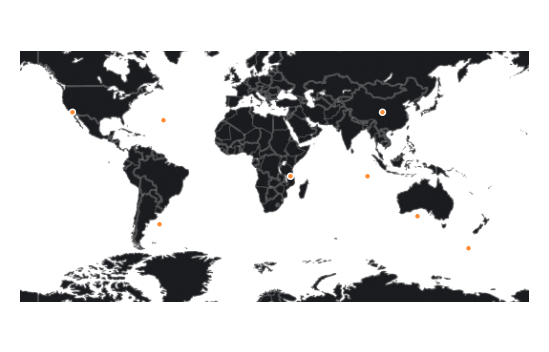
TALENT MARKET INSIGHTS

CAREER PATHS
DATA INTEGRATION
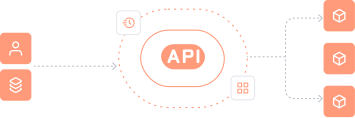
TECH STACK

The image is for representational purpose only.
01
Unified Talent Intelligence Across Energy Functions
Integrated insights on Geoscience, Engineering, Technical, and Logistics roles—covering availability, maturity, compensation, mobility, and peer activity to guide localized workforce strategy.
02
Global Hub Prioritization for Digital & Enterprise Roles
ML-driven evaluation of APAC, LATAM, and EMEA markets identified cost-efficient, scalable hubs such as Bangalore, Bangkok, and Buenos Aires.
03
Standardized University & Early-Career Benchmarking
Assessed graduation volumes, STEM strength, curriculum relevance, and industry engagement to strengthen early-career talent pipelines.
04
Deep Market Intelligence for Key North American & Emerging Hubs
Provided function-level insights across Calgary, Edmonton, and Georgetown by combining hiring demand, mobility patterns, and competitor benchmarking.
Outcome
6,100+
Locations
4M+
Career Paths
1.7M+
Peer Group Companies
28K+
Skills
3,500+
Roles
1B+
Professionals
55K+
Universities
1B+
Job Descriptions
200K+
Courses
180K+
Technology Solutions
900K+
Account Priorities
Labor Market Data Contextualized with Business Intelligence for Every Decision
Analyzing 1B+ data points daily from 100K+ sources
6,100+
Locations
4M+
Career Paths
1.7M+
Peer Group Companies
28K+
Skills
3,500+
Roles
1B+
Professionals
55K+
Universities
1B+
Job Descriptions
200K+
Courses
180K+
Technology Solutions
900K+
Account Priorities

.svg)




.svg)
