Navigating the Talent Competitive Landscape in U.S. Engineering & Construction
Discover how Draup enabled a global EPC leader to build structured competitive intelligence on a primary rival’s hiring behavior, organizational design, compensation posture, and talent migration patterns.
About the Company
The organization is one of the world’s foremost engineering, procurement, and construction enterprises, with over a century of operations spanning energy, infrastructure, defense, and industrial sectors. With a global workforce and a deep project footprint across power generation, grid infrastructure, water systems, and industrial facilities, it competes for specialized talent within a tightly contested EPC market. As talent acquisition pressures intensified across its core U.S. engineering and business operations functions, the organization used Draup to build a comprehensive, data-backed intelligence picture of a primary competitor’s hiring behavior, organizational design, and compensation posture.
The Core Challenges
Hiring Benchmark Visibility
The organization had limited visibility into how a primary U.S. competitor was deploying hiring capacity across engineering and business operations job families, making it difficult to calibrate its own talent acquisition targets.
Org Structure Mapping
Without a structured view of the competitor’s functional hierarchy, understanding career path depth, span of control, and managerial density across engineering, finance, project management, and supply chain remained a gap.
Compensation Positioning
The organization sought role-by-role compensation data aligned to experience bands to assess its competitive pay positioning and evaluate whether its structure was retaining or ceding talent to the market.
Talent Migration Tracking
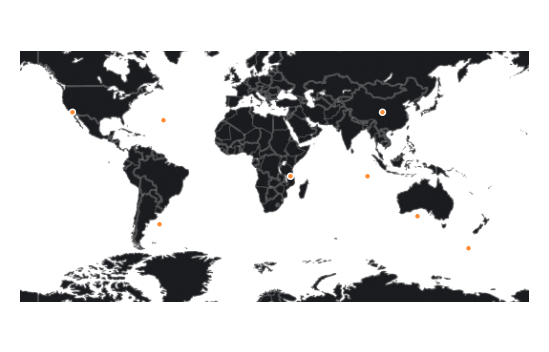
Movement of professionals from the organization to a key competitor had not been systematically tracked, leaving talent attrition risk by function, location, and seniority without a data-backed foundation for response.
The Solution
Outcome
Competitor Hiring Benchmarks
A structured, function-by-function view of the competitor’s hiring rates, job posting volumes, and geographic demand patterns enabled calibrated decisions about where to intensify or rationalize talent acquisition investments.
Organizational Depth Profiles
Detailed org maps across eight functions delivered a clear picture of hierarchy depth, span of control norms, and managerial density — inputs that directly inform workforce design, internal progression frameworks, and competitive role differentiation.
Compensation Positioning Intelligence
Role- and band-level pay benchmarks across all major job families established a data-backed foundation for assessing pay competitiveness, identifying gaps, and informing compensation strategy without reliance on self-reported market surveys.
Attrition Risk Visibility
A data-driven map of talent migrating from the organization to its primary competitor by role, location, and tenure gave workforce planning leaders the evidence needed to identify at-risk populations and proactively strengthen retention in high-attrition corridors.