



AI Agent for Propensity to Buy
Score Every Account. Call the Ones That Will Close.
The AI sales agent that scores every target account across 10 parameters, benchmarks it against peers, and gives you five specific actions to take next. Stop spreading effort across accounts that will never close. Concentrate it where the deal is real.
By filling up this form, you agree to allow Draup to share this data with our affiliates, subsidiaries and third parties


Your Team Is Prioritizing Accounts on Instinct, Not Evidence

Gut-Feel Account Prioritization
Reps prioritize accounts based on relationship history or brand recognition rather than verified signals of financial capacity, outsourcing activity, and strategic alignment. High-propensity accounts get missed.

No Peer Benchmarking
Without comparing an account's outsourcing posture and tech stack against its peers, sellers cannot distinguish an account that is genuinely ahead of the market from one that only appears active.

Signal Blind Spots
Partnership announcements, CEO transitions, board-level AI mandates, and workforce restructuring programs are among the strongest buying signals in enterprise technology. Most teams catch them too late or not at all.

Inconsistent Pursuit Thresholds
Without a shared scoring framework, different reps and regions make different calls on whether an account warrants a pursuit investment; leading to uneven pipeline quality and unpredictable conversion rates.


How This AI Sales Agent Works
The Propensity to Buy Agent scores a target account against 10 structured parameters organized across three dimensions: investment propensity, relevance to core workloads, and engagement and digital alignment. Each parameter is scored against a defined bracket, benchmarked against peer accounts where applicable, and accompanied by a written rationale that tells the seller exactly what the data means.

The account's year-on-year revenue growth rate is pulled and placed into a scoring bracket. Consistent growth signals financial capacity to fund technology programs; exceptional growth signals urgency and budget availability.
What is Walmart's revenue growth trajectory and what does it signal for AI investment capacity?

EBITDA growth is assessed to distinguish accounts that are expanding margin from those reinvesting into transformation. Near-flat or declining EBITDA alongside rising revenue often signals active technology investment rather than financial stress.
Is Walmart's EBITDA trend consistent with deliberate reinvestment into AI and automation?
.svg)
IT spend is normalized per employee and placed into a bracket ranging from low-spend to high-spend organizations. High per-employee IT spend confirms both the appetite and the infrastructure for large-scale technology engagements.
How does Walmart's IT spend per employee compare to the high-spend bracket threshold?
.svg)
IT spend as a share of total revenue indicates how central technology is to the account's operating model. Technology-first organizations spending above 7% of revenue on IT are among the most active buyers of external services.
What share of Walmart's revenue goes to IT and does that place it in a top-bracket technology buyer profile?
.svg)
Active outsourced engagements in the seller's focus area are counted and benchmarked against the peer average. Accounts at or above peer average with three or more relevant workloads score in the mid to upper bracket.
How many AI and Data Science outsourced deals does Walmart have compared to Amazon and its retail peers?

Active job postings in the focus area are analyzed to confirm whether the account is hiring aggressively in the domain. High posting volume validates internal demand that external providers can supplement; zero postings may signal a partnership-led or reskilling-led strategy that itself creates buying opportunity.
Is Walmart posting AI-specific roles at scale or building capability through partnerships and reskilling instead?
.svg)
The breadth of AI-relevant technology categories in the account's active stack is counted and benchmarked against peers. Accounts adopting significantly more categories than the peer average with a growing adoption trend score at the top of the bracket.
How many AI tech categories does Walmart actively use compared to Amazon and jd.com?

Direct and adjacent buying signals from the last six months are classified and counted. Direct signals include named AI partnerships, product launches, board-level AI mandates, and CEO transitions. Three or more direct signals scores the maximum for this parameter.
What direct AI buying signals has Walmart produced in the last six months and how does that translate to a buying window?
.svg)
The seller's confirmed deal count at the account is assessed alongside its rank relative to the leading incumbent providers. An active but mid-tier presence scores differently from a dominant or sole-provider position.
How many active deals does HCL have at Walmart and how does that rank against Cognizant, Infosys, and Accenture?

The account's stated strategic priorities are mapped against the seller's focus area to identify explicit alignments (priorities that name the solution domain directly) and functional alignments (priorities that require the solution domain to execute). Two or more explicit alignments scores the maximum.
Which of Walmart's stated FY2026 priorities name AI directly and what specific services do they require from a provider like HCL?
Propensity to Buy Agent is used by
1
Enterprise Account Executives
Know exactly whether to invest pursuit time in an account before spending hours on research. Walk into first meetings with a scored, evidence-based view of buying readiness.
2
Revenue Operations
Prioritize pipeline by propensity score rather than rep intuition. Direct pursuit resources toward accounts with the highest validated likelihood to buy.
3
ABM and Demand Gen Teams
Build campaigns around accounts that have already demonstrated buying signals rather than broad ICPs that rely on fit criteria alone.
4
Deal Pursuit and Bid Teams
Enter every RFP response or pursuit conversation knowing the account's financial health, outsourcing posture, tech stack maturity, and strategic alignment score.
5
Sales Enablement Teams
Replace static propensity models with live, signal-based scoring that updates as accounts move and markets shift; giving every rep a consistent, evidence-backed view of account priority.
6
GTM Leaders and Executives
Make territory and investment decisions based on ranked propensity data across your entire account list rather than anecdote and historical relationship depth.
Accelerate Every Deal Cycle with AI Agents for Sales
Give your teams always-on agentic intelligence that speeds up every step of your GTM motion; from account identification to deal closure.
By filling up this form, you agree to allow Draup to share this data with our affiliates, subsidiaries and third parties


Unlock a complete Propensity Assessment for any target account and focus area

Scoring Summary Table
All 10 parameters with max score, actual score, and the key data point driving each result; presented in a single scannable table.

Propensity Summary Card
The final score out of 100, propensity tier (High, Medium, or Low), and sub-scores across Investment Propensity, Relevance to Core Workloads, and Engagement and Digital Alignment.
.svg)
Parameter Rationale
A full written rationale for every parameter explaining the data source, peer benchmarking, scoring bracket applied, and the strategic interpretation for the seller.

Signal Environment Analysis
A classified breakdown of Direct and Adjacent signals from the last 6 months; each with the event, date, and a specific implication for what the seller should do next.

Strategic Priority Alignment Detail
Explicit and functional alignments between the seller's focus area and the account's stated strategic priorities; with named programs, budget owners, and service requirements per alignment.

Propensity Verdict
A plain-language summary of what the score means and what is driving it, written for a seller who needs to brief a pursuit team in under 2 minutes.

Recommended Seller Actions
5 prioritized, specific actions for the seller; each tied to a named program, budget owner, competitive context, and a clear rationale for why it will move the deal forward.
Impactful insights, delivered real-time
Access insights via API, custom data feeds, the Draup platform or using MCP
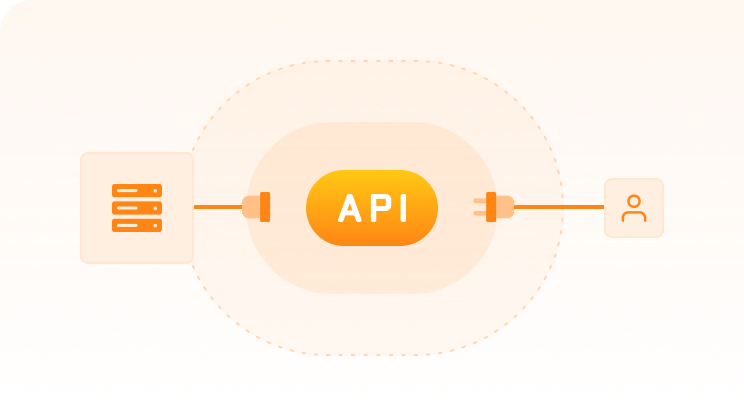
APIs & Integrations
Best for
Embedding live insights in workflows without storing data
- Native integrations with 33+ CRMs, like Salesforce, Hubspot, Microsoft Dynamics CRM, etc.
- Real-time access to critical data
- Enhanced security and data Integrity
- Efficient API performance with flexible limits
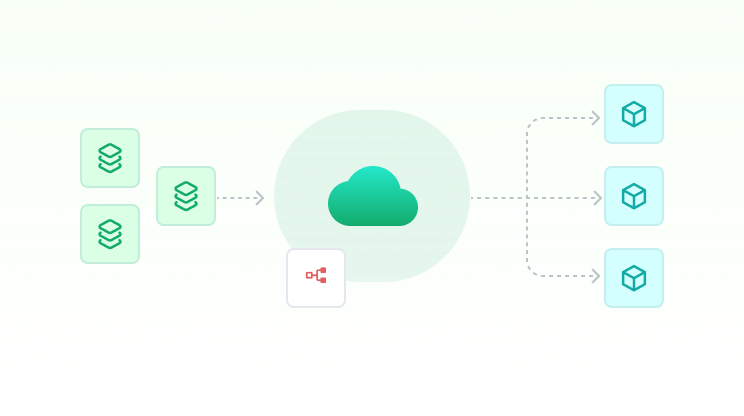
Custom Data Feed
Best for
Analytics at scale & joining Draup with internal data
- Highly customizable feeds for workflow needs
- Scheduled pushes to data lakes/warehouses (S3, ADLS, BigQuery, SFTP)
- Scalable use cases with the data
- Integrates with internal data assets for co-pilots/agents
Draup Platform
Best for
Fastest time-to-value,
no build required
- Ready-to-use UI with 200+ productized use cases & workflows
- Leverage visualizations & workflows to drive seller action with no overhead
- Enterprise controls: SSO, RBAC, governance
- Integrates UI & functionality into CRM apps
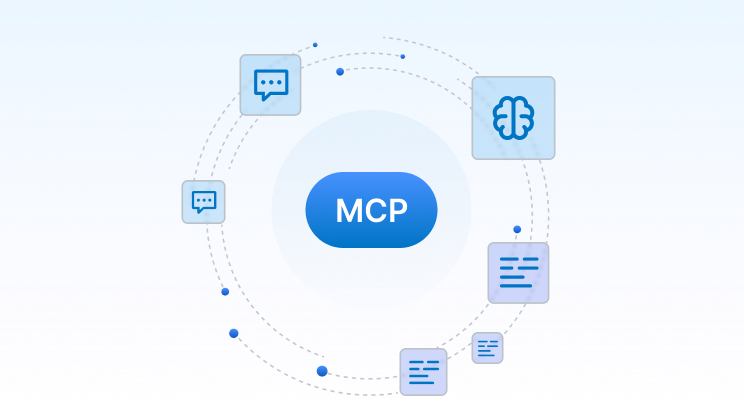
Model Context Protocol
Best for
Real-time Al workflows & LLM applications
- Native integration with Claude, OpenAl, and MCP-compatible Al tools
- Zero ETL, models query live data without pipelines or reindexing
- Governed access with token-based scopes, Pll masking, and audit trails
- Grounded, real-time data prevents LLMs from generating outdated or inaccurate insight
Enterprises do extraordinary things with Draup
Real stories. Real Success.


The Propensity to Buy agent is Powered by unparalleled global market data


.svg)

.svg)
.svg)


.svg)




.svg)
