



AI Agent for AI Readiness Assessment
Pitch AI to the Accounts Actually Ready to Buy It.
The AI sales agent that benchmarks any target account across five AI readiness dimensions, scored against named peers and translated into the gaps you can fill. Walk into every AI conversation with the specific use cases that close the distance.
By filling up this form, you agree to allow Draup to share this data with our affiliates, subsidiaries and third parties


Your Team Is Selling AI Services Without Knowing Where the Account Actually Stands

Generic AI Pitches That Do Not Land
Sellers walk into AI conversations armed with market statistics and case studies that could apply to any account. Buyers who have already invested heavily in AI tune out immediately.

No Peer Benchmark Evidence
Saying an account should invest more in AI is unconvincing. Showing that a named competitor is 3 years ahead in LLMOps tooling and agentic AI deployment with specific evidence is a conversation-stopper.

Missed Gap-to-Service Connections
An account's AI tech stack gaps, hiring trajectory, and outsourcing patterns directly indicate which services it needs next. Without structured analysis across all five dimensions, sellers miss these connections.
.svg)
No Urgency Signal
AI maturity gaps only create urgency when they are tied to a named peer pulling ahead right now. Without a 90-day signal log, sellers cannot demonstrate that the window to act is today rather than next quarter.


How This AI Sales Agent Works
The AI Readiness Assessment Agent evaluates a target account across five dimensions; AI strategic priorities, real-world signals, hiring and capability building, outsourcing depth, and tech stack breadth. Each dimension is benchmarked against a defined peer set and the industry average. The output is a complete maturity report with a verdict, a competitive scorecard, and use case recommendations tied directly to the gaps identified.

The agent maps all of the account's strategic priorities against an AI relevance filter; identifying AI priority clusters by theme, counting individual priorities per cluster, and assessing the overall maturity of the priority structure relative to peers.
What is Walmart's revenue growth trajectory and what does it signal for AI investment capacity?

AI-relevant signals from the last 90 days are identified, dated, and classified by type (product launch, strategy announcement, hiring or leadership move, infrastructure investment). Signal count is compared against peers to produce a velocity rating.
Is Walmart's EBITDA trend consistent with deliberate reinvestment into AI and automation?

Trending-up and trending-down AI-relevant skills are identified with posting volumes. Hiring trajectory is rated and benchmarked against the industry average across AI role categories and monthly hiring volume.
How does Walmart's IT spend per employee compare to the high-spend bracket threshold?

Active outsourcing relationships are mapped against AI-relevant workloads. The depth of AI-specific outsourcing is assessed against peers; distinguishing between accounts using generalist partners for enabling infrastructure and those building specialist AI vendor ecosystems.
What share of Walmart's revenue goes to IT and does that place it in a top-bracket technology buyer profile?
.svg)
All active AI tools and platforms are cataloged by category with adoption trend and significance ratings. Newly added tools are identified. Tech stack breadth is benchmarked against peers by distinct AI capability category count and total AI product count.
How many AI and Data Science outsourced deals does Walmart have compared to Amazon and its retail peers?
.svg)
Each of the five dimensions is rated for every peer as ahead, on par, or behind; with an overall AI maturity tier assigned to each peer. Industry averages are derived from vertical-level aggregate data to provide a second benchmark layer beyond the named peer set.
Is Walmart posting AI-specific roles at scale or building capability through partnerships and reskilling instead?

The dimensions where the account is winning and losing the AI race are structured into two tables; each with specific evidence of strength or gap and the competitive advantage at stake or the risk if unaddressed.
How many AI tech categories does Walmart actively use compared to Amazon and jd.com?
.svg)
Up to 6 prioritized use cases are generated; each tied to a specific gap identified in the assessment, with an implementation mode, a rationale grounded in the account's own priorities and tech stack, and named peers already executing the same use case.
What direct AI buying signals has Walmart produced in the last six months and how does that translate to a buying window?


AI Readiness Assessment Agent is used by
1
Enterprise Account Executives
Enter AI-focused conversations knowing exactly where the account sits in its AI maturity journey, where peers are ahead of it, and which gaps create the most urgent service opportunities.
2
Strategic Account Managers
Identify new service line opportunities based on AI capability gaps the account has not yet addressed internally or through existing partners.
3
Deal Pursuit and Bid Teams
Ground RFP responses in verified AI readiness evidence: tech stack breadth, hiring trajectory, outsourcing depth, and signal velocity relative to named peers.
4
Sales Enablement Teams
Build AI-specific account briefs and conversation starters grounded in real maturity data rather than generic AI market statistics.
5
ABM and Demand Gen Teams
Segment and prioritize accounts by AI maturity tier to target campaigns and content at accounts in the right phase of their AI adoption journey.
6
GTM Leaders and Executives
Identify which accounts in your portfolio are Leading, Established, or Developing in AI maturity; and direct pursuit investment accordingly.
Accelerate Every Deal Cycle with AI Agents for Sales
Give your teams always-on agentic intelligence that speeds up every step of your GTM motion; from account identification to deal closure.
By filling up this form, you agree to allow Draup to share this data with our affiliates, subsidiaries and third parties


Unlock a complete AI Readiness and Maturity Intelligence package for any account

AI Maturity Verdict
Overall maturity tier (Leading, Established, or Developing), peer rank, and vs. industry standing; summarized in a single scannable verdict card.

AI Readiness at a Glance
Status ratings across 5 dimensions (Priorities, Signals, Hiring, Outsourcing, Tech Stack) vs. peers and vs. industry, each with a trend direction indicator.
.svg)
Competitive Benchmark Matrix
Side-by-side comparison of all peers across all 5 dimensions, with ahead, on par, or behind ratings and an overall AI maturity tier per peer.

Where the Account Is Winning
The specific AI dimensions where the account leads the peer set, with evidence of strength and a recommended action to protect and extend the advantage.

Where the Account Is Losing Ground
The specific AI gaps relative to named peers, with evidence of the gap and the risk if it remains unaddressed; each tied to a concrete action.

The 3 Moves That Matter Most
A prioritized action table with urgency rating, specific action, why now rationale, and expected impact; designed for immediate executive use.

AI Strategic Priorities Analysis
All AI priority clusters categorized, described, and counted; with a maturity assessment narrative explaining what the priority structure signals about execution stage.
AI Tech Stack Analysis
All active AI tools and platforms with category, adoption trend, and significance; plus a tech stack intelligence narrative identifying gaps and acceleration signals.
Peer and Industry Benchmarking
Full peer set with selection rationale and a comprehensive benchmark matrix; followed by peer and industry benchmarking commentary.

AI Race Scorecard
Structured tables covering where the account is winning and losing the AI race, with evidence and risk ratings per dimension.

Strategic AI Use Case Recommendations
Up to 6 prioritized use cases; each with the gap addressed, implementation mode, rationale, and which peers are already doing it.
Impactful insights, delivered real-time
Access insights via API, custom data feeds, the Draup platform or using MCP
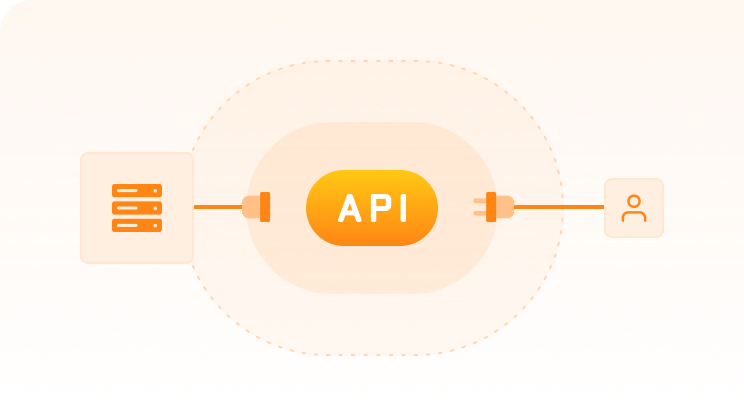
APIs & Integrations
Best for
Embedding live insights in workflows without storing data
- Native integrations with 33+ CRMs, like Salesforce, Hubspot, Microsoft Dynamics CRM, etc.
- Real-time access to critical data
- Enhanced security and data Integrity
- Efficient API performance with flexible limits
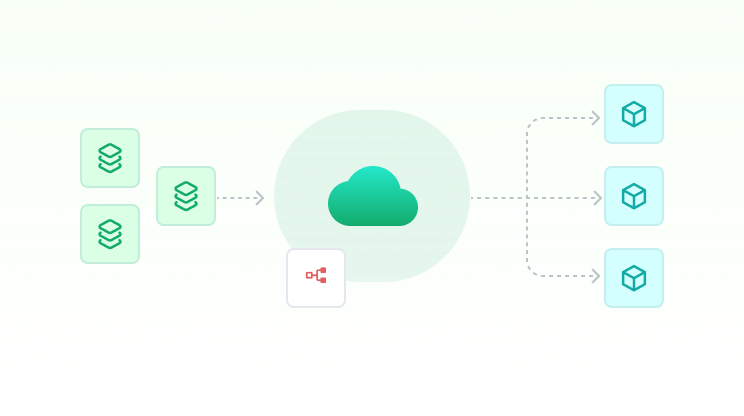
Custom Data Feed
Best for
Analytics at scale & joining Draup with internal data
- Highly customizable feeds for workflow needs
- Scheduled pushes to data lakes/warehouses (S3, ADLS, BigQuery, SFTP)
- Scalable use cases with the data
- Integrates with internal data assets for co-pilots/agents
Draup Platform
Best for
Fastest time-to-value,
no build required
- Ready-to-use UI with 200+ productized use cases & workflows
- Leverage visualizations & workflows to drive seller action with no overhead
- Enterprise controls: SSO, RBAC, governance
- Integrates UI & functionality into CRM apps
Model Context Protocol
Best for
Real-time Al workflows & LLM applications
- Native integration with Claude, OpenAl, and MCP-compatible Al tools
- Zero ETL, models query live data without pipelines or reindexing
- Governed access with token-based scopes, Pll masking, and audit trails
- Grounded, real-time data prevents LLMs from generating outdated or inaccurate insight
Enterprises do extraordinary things with Draup
Real stories. Real Success.


The AI Readiness Assessment agent is Powered by unparalleled global market data


.svg)

.svg)
.svg)


.svg)




.svg)
